

2025/2026 Projects and Fundraiser Video
John Day River Research Update
Emily Lowrimore, Univ. of Idaho, Research Assistant.
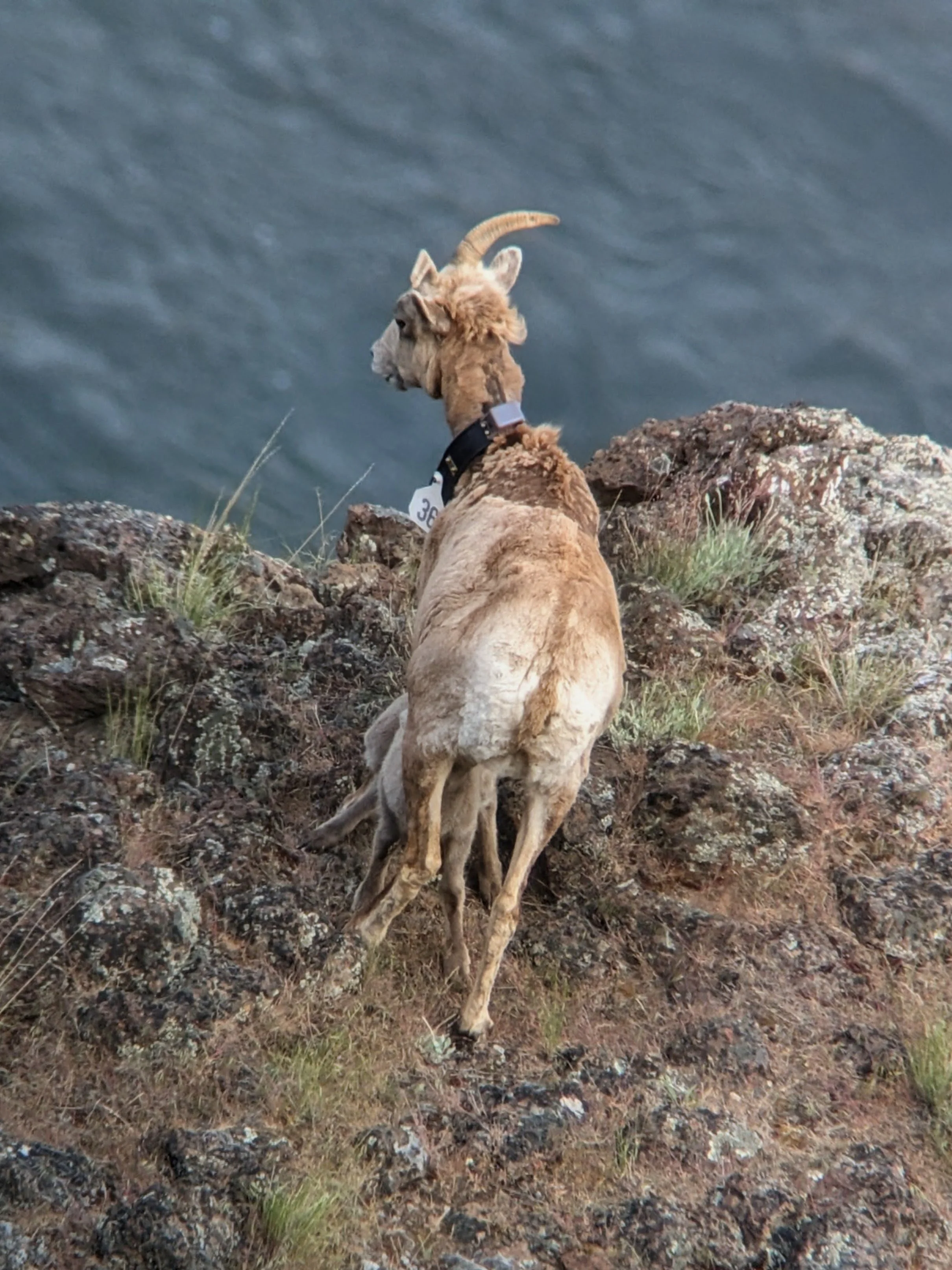
Although bighorn sheep research often begins with a problem to solve, the Lower John Day bighorn project begins with a success story. Since reintroduction efforts began in the late 1980s, the Lower John Day herd has grown to more than 1,000 animals while remaining free of Mycoplasma ovipneumoniae (M. ovi), the respiratory pathogen that has slowed bighorn sheep recovery across much of the West. As a result, the John Day herd provides a rare opportunity to explore factors that allow a bighorn sheep population to flourish.
Over the past few years, University of Idaho graduate students and the Oregon Department of Fish and Wildlife have conducted one of the most comprehensive studies to date on the ecology of a healthy California bighorn sheep population. Supported by the Oregon Chapter of the Wild Sheep Foundation, the project evaluates nutrition, habitat use, behavior, and population ecology to understand what has allowed this herd to thrive.
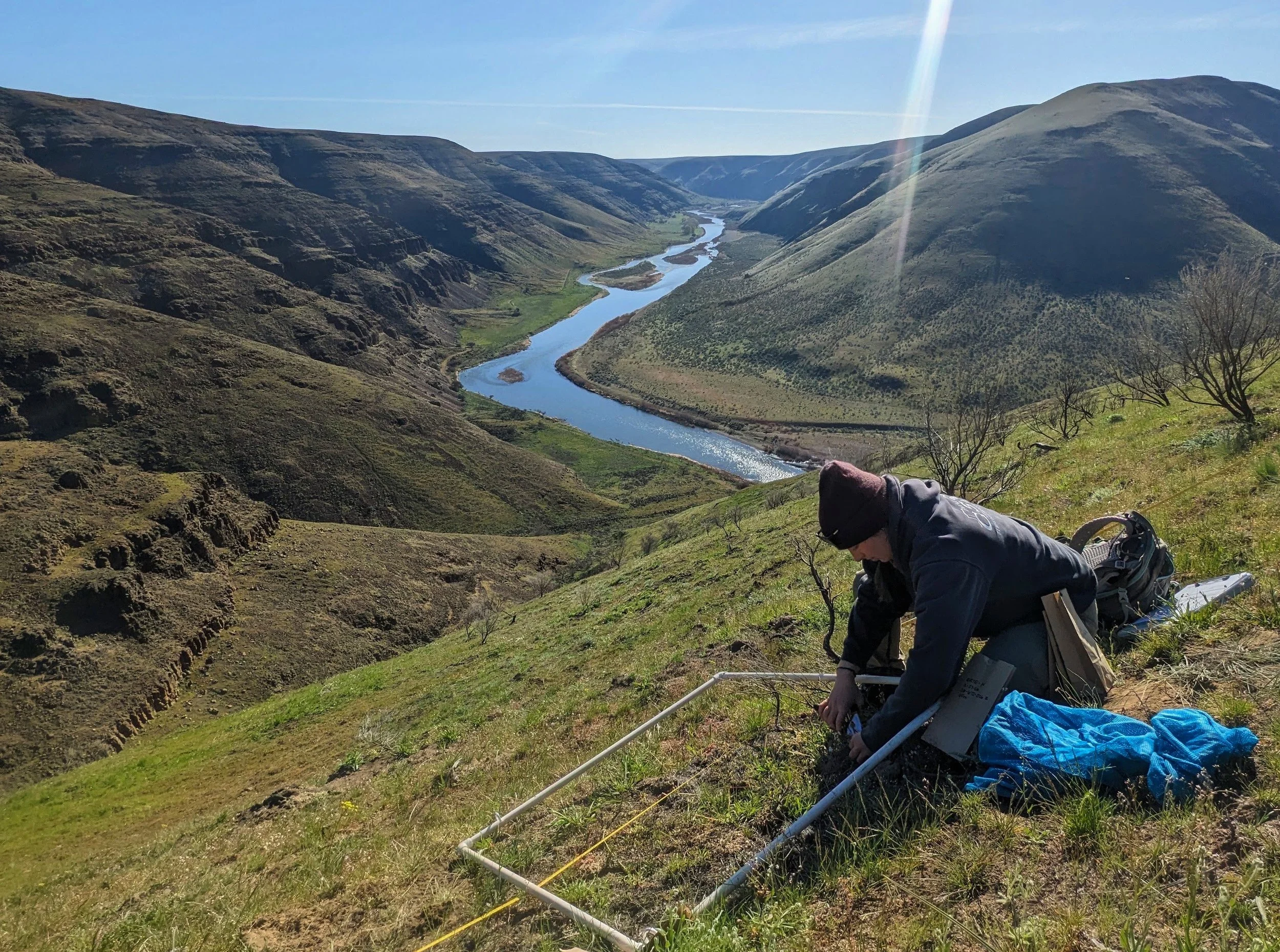
During the first two years of the study, nearly 100 California bighorn sheep were safely captured, fitted with GPS collars, and evaluated for health and reproductive status. Each spring, the graduate students returned to the canyon to track collared ewes through the lambing season. They documented social behavior and lamb survival while GPS collars quietly recorded movements and patterns of habitat use. At the same time, project personnel surveyed more than 150 vegetation transects and collected nearly 1,000 plant samples to measure the quality and distribution of forage throughout the canyon, while dozens of fecal samples were collected to characterize sheep diets.
At the end of each field season, work shifted from the canyon to the laboratory, where the project's many pieces came together. Plant samples were analyzed for nutritional quality, fecal samples underwent DNA metabarcoding analysis to identify the plants consumed by sheep, and field observations were integrated with GPS collar data to connect nutrition, habitat use, maternal behavior, and population performance.
Preliminary results have revealed that the nutritional landscape in the Lower John Day provides abundant, high-quality forage throughout the year rather than just during the spring growing season. Corresponding GPS-collar data have made it clear that reproductive females consistently remain close to escape terrain while raising lambs, but that the productive landscape of the John Day allows them to do so without sacrificing access to high-quality forage—a trade-off long thought to constrain habitat use and performance of bighorn sheep. Those patterns scale up to the population level, where researchers have documented consistently strong recruitment, with lamb survival often exceeding 80 percent. Together, these findings suggest that the Lower John Day allows female bighorn sheep to simultaneously meet both their nutritional and security needs while raising lambs, helping to sustain the continued growth of the herd.
The implications of this project extend well beyond the Lower John Day. As researchers finalize their picture of how nutrition, habitat use, behavior, and population ecology interact in a thriving, disease-free population, the project is helping establish a benchmark to guide habitat restoration and bighorn sheep management across Oregon and the West. This project demonstrates what is possible when long-term partnerships bring together dedicated graduate students, innovative research, and sustained conservation support. Together, they are providing wildlife managers with the science needed not only to understand one success story, but to help create more.
ION Partnership - Idaho, Oregon, Nevada
Beyond Borders: Tri-State Oregon, Washington, Idaho
Hopes & Dreams: The Opportunity Ewe
One of our board members, Marcus Gores, shared the experience and story of one of the most achievable sheep hunts in Oregon. We now want to share with you how to join the Wild Sheep Community and help with the conservation efforts to Put and Keep Wild Sheep on the Mountain.
We conserve wild sheep through outreach, restoration, and research.
The primary focus of Oregon Wild Sheep Foundation is to enhance the population, health and vitality of bighorn sheep herds in Oregon.
This objective is accomplished through educating Oregonians about North American wild sheep, funding projects aimed at conservation and game management, and protecting, defending and preserving the lawful right of recreational hunting as a method promoting Bighorn sheep conservation, habitat restoration and a means to safeguard the decline or extinction of any such indigenous species.
To access our previous website CLICK HERE

About
Find out about our organization,
mission, our methods, and the results of conservation efforts.

Take Action
Ready to take the next step? You can become a member of our organization and participate in our events
Up coming events
November Board Meeting
November 5 2026
6:30pm – Zoom Call
December Board Meeting
December 3 2026
6:30pm – Zoom Call
January Board Meeting
TENTATIVE January 9 2026
8:30am – North Plains, OR
Sheep Week 2027
February 3-6 2027
Reno, NV
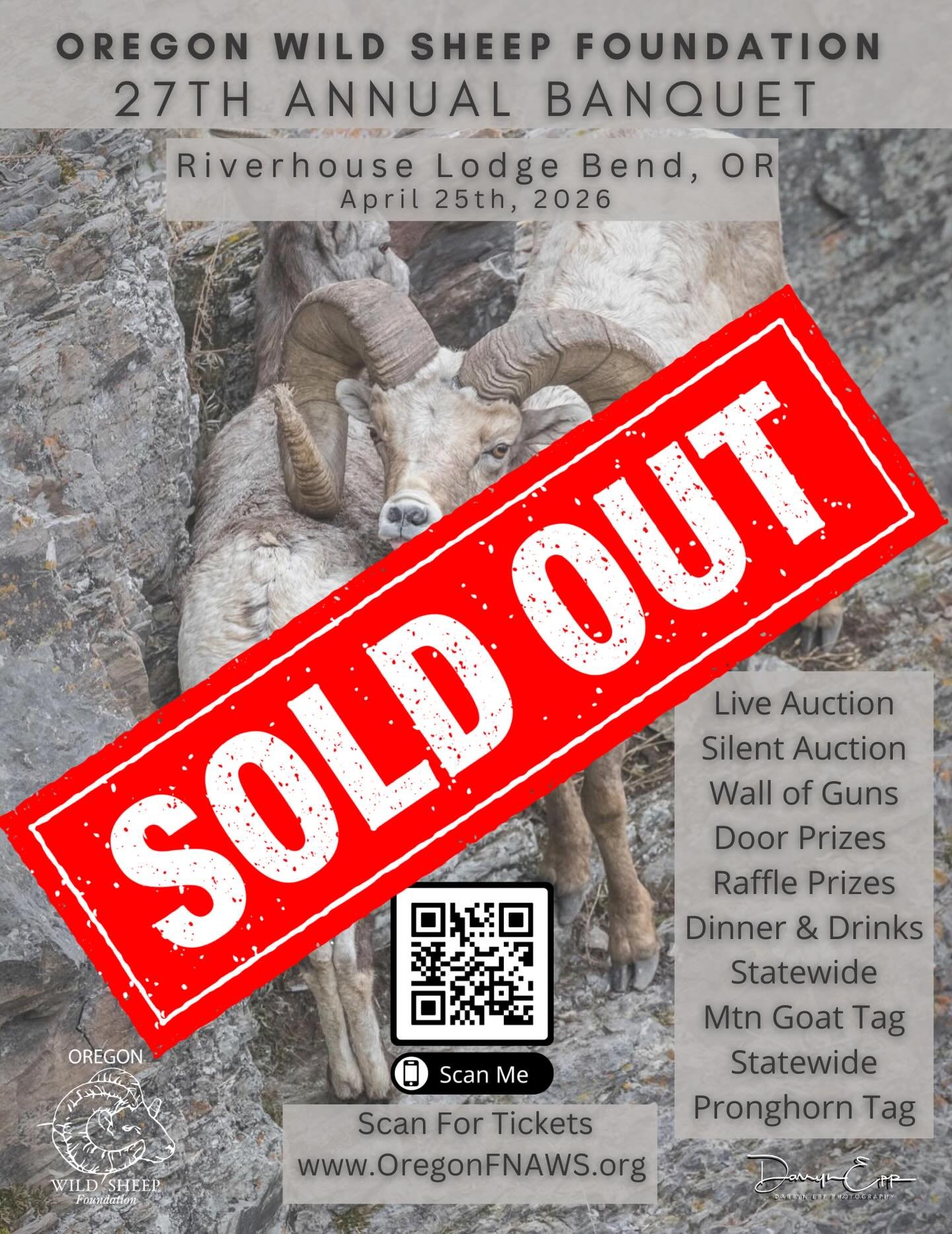
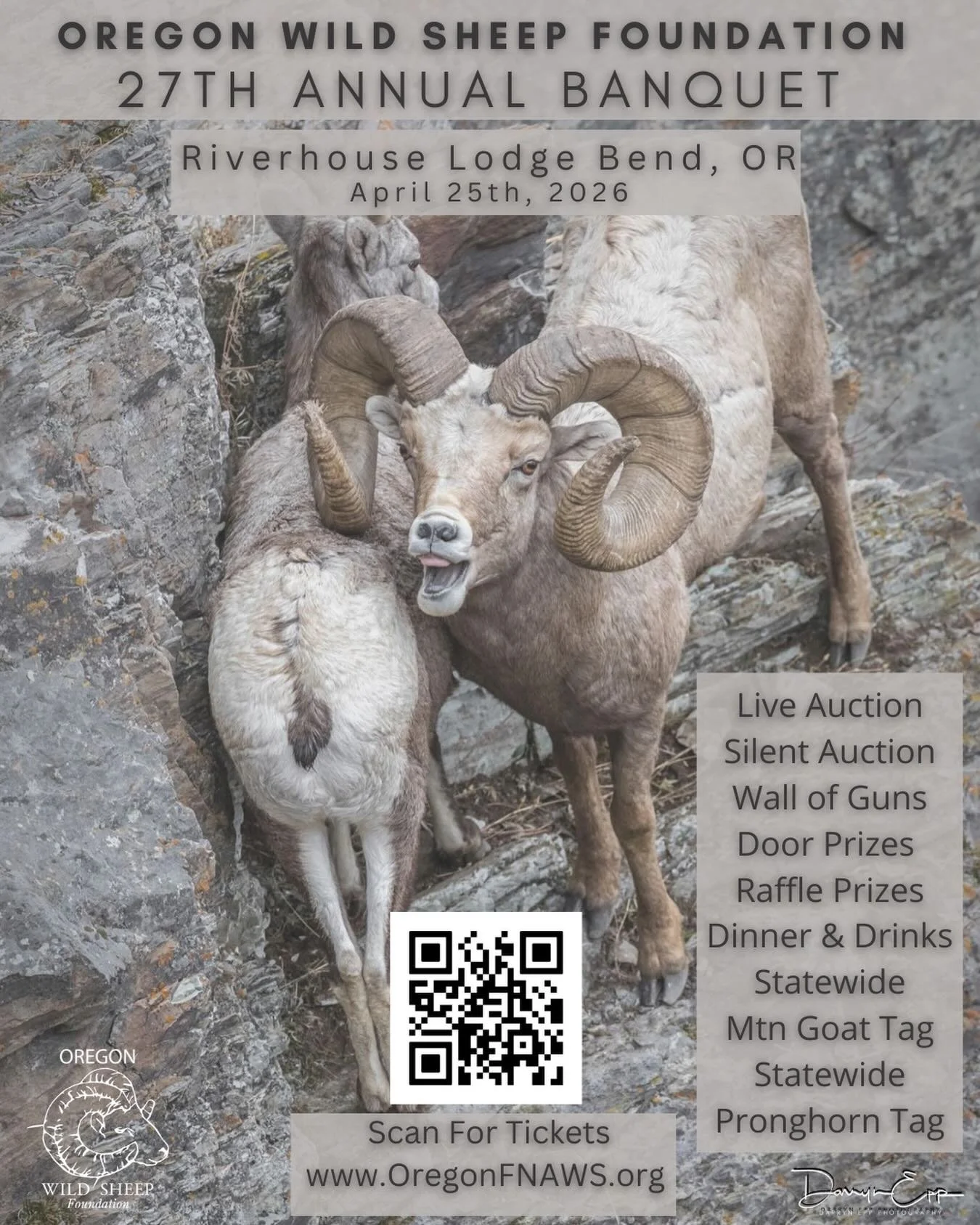
OR WSF 28th Annual Banquet
April 17 2027
3:30pm
Bend, OR


To download and complete a Grant In Aid Request form, please click the button below.
Please note: OR WSF will be reviewing GIA Request Applications twice a year in January and in July. In order to have you application considered for review, applications must be submitted by the following:
Submit December 15th for January review
Submit June 15th for July review